Showing posts with label Gene Hackman. Show all posts

Tuesday, 19 March 2013

Enemy of the State.


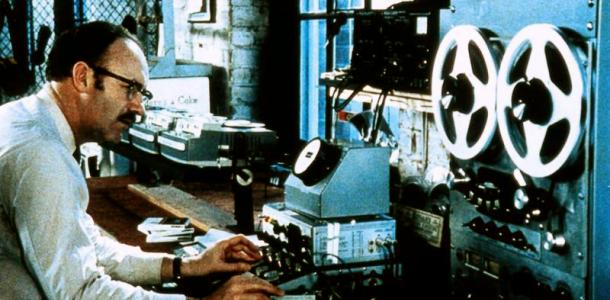
Modern day life and its technological advances can be really scary at times, especially as the surveillance equipment shown in Tony Scott’s 1998 action thriller Enemy of the State would have no doubt become more sophisticated in the intervening years.  A friend recommended this movie to me after we watched Francis Ford Coppola’s psychological thriller The Conversation (1974).  Although Scott’s film does not convey the same ‘brooding sense of paranoia and claustrophobia’, Gene Hackman does appear to reprises and update his role as the isolated surveillance expert Harry Caul now called Edward Lyle/Brill, note the still from Ford Coppola’s movie for Lyle’s NSA file photo.

Will Smith and Gene Hackman.
Congressman Phil Hamersley (an uncredited Jason Robards) is murdered by a group of National Security Agency operatives because he was threatening to veto a government bill that would grant the organization increased surveillance powers over ordinary citizens, at present NSA's intelligence gathering is limited to foreign communications. What NSA official Thomas Reynolds (Jon Voight) does not know is that a video camera, set up by a wildlife researcher Daniel Zavitz, has captured the complete incident on film. That is until Zavitz tries to get the tape to a radical reporter. Before our government agents can get their hands on the tape and destroy the evidence, Zavitz manages to get the incriminating proof to a lawyer called Robert Dean (Will Smith) who is totally unaware he has the tape. This incident sparks a serious of events that should never be allowed in a civilized society, turning the life of our socially privileged lawyer completely up side down and putting it at risk.

The late Tony Scott.
Tony Scott, who sadly committed suicide by jumping off the Vincent Thomas Bridge in the San Pedro district of Los Angeles California on the 19th August 2012, made stylish thrillers films that were generally more popular with the public than they were with the critics. His skill is weaving complex stories with exciting imagery that entertain audiences and Enemy of the State turns out to be no different, great action set pieces and it even has a Johnnie To style shoot out towards the end.

Not normally a great admirer of Will Smith but I agree with Kim Newman when he say’s that ‘(Smith’s) slightly self satisfied persona is ideally suited to the role of a man slowly stripped of his life and identity[1]’ As well as the cast members I’ve already mentioned we also get some young upcoming actors including Jack Black, Ian Hart, Loran Dean, and Barry Pepper. I enjoyed this film and at just over two hours it never seems to long or drawn out, if you have not seen it give it a try.


[1] Sight and Sound January 1999

Friday, 18 November 2011

The Conversation.


Gene Hackman as Harry Caul.
A classic film, like beauty, is in the eyes of the beholder. The Robert Burns Centre Film Theatre Film Club asked that very question of Francis Ford Coppola’s 1974 movie The Conversation. By the end of a very interesting evening hosted by Alec Barclay the consensus of the very intent audience was that it probably was, due to a variety of reasons. The reasons offered were that it is an extremely well grafted film with a very clever plot twist, some imaginative camera work, and superb direction by the man whose other work in the seventies included redefining the gangster genre with The Godfather (1972) and The Godfather Part 2 (1974) and making his Vietnam masterpiece Apocalypse Now (1979), and is probable one of the best film’s Gene Hackman made in a long and distinguished career.

John Cazale plays Harry's assistant Stan...

 Hackman plays Harry Caul a paranoid and reclusive professional surveillance officer who is instructed to spy upon a young couple. After bugging a crucial conversation, he suspects that his work may lead to their murder. Haunted by a previous tragedy in which he became implicated, he becomes obsessed with finding out the truth behind the conversation he has been asked to record. This psychological thriller, written and produced as well as directed by Coppola, was released after the Watergate scandal broke, therefore the themes of surveillance, paranoia and eavesdropping was prominent in the minds of Americans. 

Alec informed us that Coppola started work on The Conversation screenplay right after the opening of You’re a Big Boy Now in 1966, and completed a first draft in 1969. At that time there were very few original screenplays being written, and he had resolved ‘to do films only from my own original stories.’ But nobody was prepared to finance the film until Coppola had his huge success with The Godfather. The screenplay for The Conversation was partly inspired by Michelangelo Antonioni’s Blow Up, from1966.

with Cindy Williams and Frederic Forrest as the subjects of Harry Caul's surveillance....

Continuing with his introduction Alec when on to quote Coppola saying that the director had a desire to imitate and be inspired by Antonioni. “Blow Up is a very beautiful and intriguing film because it combined Antonioni’s sense of mood and personal texture and a sort of non-verbal film making with a very curious plot. I very much thought oh that’s the kind of film … these are the kinds of films I want to make where you take a theme or an idea or an area that might be something innovative. Right from the beginning I wanted to make a film about privacy; using the motif of eavesdropping and wiretapping, and centering on the personal and psychological life of the eavesdropper rather than his victims. It was to be a modern horror film, with a construction based on repetition rather than exposition, likes a piece of music. And it would expose a tacky, subterranean world of wire tappers; their vanities and ethics; the conventions that they attend; the magazines they read; and the women they value. Ultimately, I wanted the film to come to a moral and humanistic conclusion.”

and Harrison Ford as the manipulator Martin Stett.

The subject matter is still very relevant today with CCT, credit cards, and GPS systems and of course e-mails. Is anything we do today private? Coppola’s film is a very clever study of a paranoid reclusive loner who gradually realises the consequences of the job he carries out. Slightly dated but well worth seeing and yes a classic.